Designing a Countertop Dispensing Appliance
A dispensing appliance is a small machine that has to be accurate, cleanable and safe on a kitchen counter.
2026
Client
BrahmWorks Insights
What makes a dispensing appliance hard?
Drinks machines, food dosing stations, warmers and dispensers look like consumer products, but inside they are small machines. They move liquids or semi-solids, measure them, often heat or cool them, and must be cleaned every day by someone who isn’t an engineer. Getting the demo to pour once is easy. Getting it to pour the same amount, every time, for years, and to come apart for cleaning, is the real work.
Define the dose and the duty
- What is dispensed: viscosity, temperature, particles, foaming and how it changes over time.
- Dose range and how accurate it needs to be, measured on the real ingredient.
- How many doses per day, and how often refills and cleaning happen.
- Whether it is for homes, cafés or commercial kitchens, since that changes duty cycle, standards and expectations.
Choose the dosing method
Common options include peristaltic pumps, gear or diaphragm pumps, valves with timed gravity flow, augers for powders and pistons for thick products. Each trades accuracy, cleanability, cost and noise differently. Prototype the dosing module on its own first, with the real ingredient at the temperatures it will see, before designing the housing around it.
Food contact and cleaning
Every surface that touches food needs a suitable food-contact material and a way to be cleaned. Avoid dead pockets where product collects, make wetted parts removable without tools where possible, and design seals that survive cleaning chemicals and dishwashers if users will use them. Agree the food-safety and electrical requirements for your market at the start. Our guide on choosing materials for a hardware product covers the trade-offs.
Heating, cooling and temperature control
Heating chocolate, keeping coffee warm or chilling a drink adds a thermal system with sensors, control loops and safety cut-outs. Keep heaters and electronics apart, protect against running dry, and make sure surfaces users touch stay at safe temperatures.
Electronics, app and user interface
Motor drivers, level and flow sensing, temperature control and a simple interface sit on the electronics side. If there is an app, decide what must still work when the phone or network isn’t there. Plan the firmware for calibration, error states and cleaning modes.
Mechanical-only dispensers
Not every dispenser needs electronics. Fully mechanical dispensers rely on springs, cams, valves and careful tolerance control to give a consistent dose. They are simpler to certify, but every friction and wear issue shows up directly in the dose.
DFM and the path to production
Housings, water tanks and fascias are usually moulded parts, so moulding DFM and design for assembly matter early. Our industrial design and mechanical design teams work on how it looks and how it is built together; DFM and DFA reviews keep the second build like the first.
FAQs
Which dosing method is most accurate?
It depends on the ingredient. Test candidate methods with the real product before committing.
Can the appliance be both premium-looking and easy to clean?
Yes, if removable wetted parts and cleaning access are designed together with the industrial design, not added later.
Designing a dispensing or kitchen appliance? Talk to us about the dosing module, materials and first prototype.
Related articles
Manufacturing Documentation Every Hardware Product Needs
Manufacturing Documentation Every Hardware Product Needs
DFM Full Form: What Is Design for Manufacturing?
DFM Full Form: What Is Design for Manufacturing?
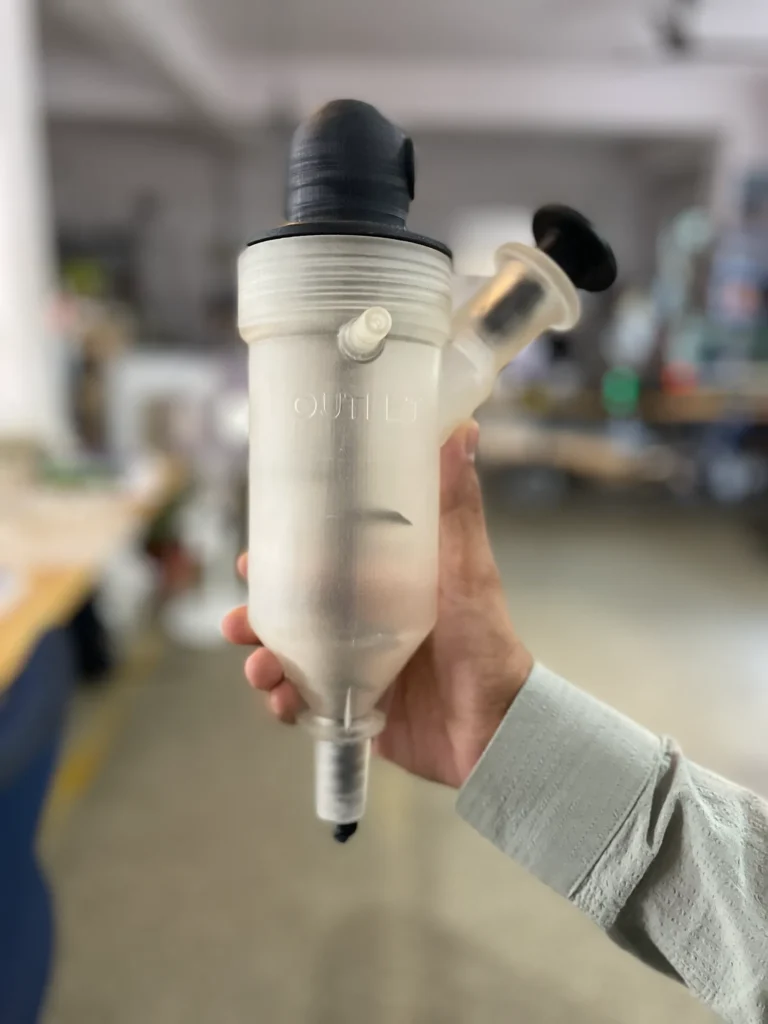
How to Reduce BOM Cost
How to Reduce BOM Cost
When Should DFM Begin?
When Should DFM Begin?
Ready to take the next step in your product development journey?
Connect
Contact Us
© 2026. Built with ♥️ in Bengaluru.