10 Types of Hardware Products Founders Asked Us About
A look at the kinds of products founders and teams brought to us over the past year, and where each one usually gets hard.
2026
Client
BrahmWorks Insights
Between November 2025 and November 2026, founders, startups and established companies asked BrahmWorks, founded in July 2017, to help with a wide range of products. These are 10 types of hardware products founders asked us about. They are not a ranking or a market survey; they are a look at real kinds of requests and the engineering risk that usually comes first in each. No client details are shared here.
1. Special-purpose and process automation machines
Handling systems, cutting rigs, recycling machines and test rigs built for one job. The main risk is sizing mechanisms for the real duty cycle and designing safety in from the start. Read our guide to special-purpose machine development or see special-purpose machines.
2. Field robots for solar and farm sites
Cleaning robots and rovers that work outdoors. The first risks are dust, water and drive-train wear, followed by cost-down for commercial builds. See field robots: ruggedising and cost-down.
3. EV charging and electric-mobility hardware
Chargers, controllers and energy products where heat, sealing and moulded enclosures decide whether the design ships. See EV charger enclosure, thermal design and DFM.
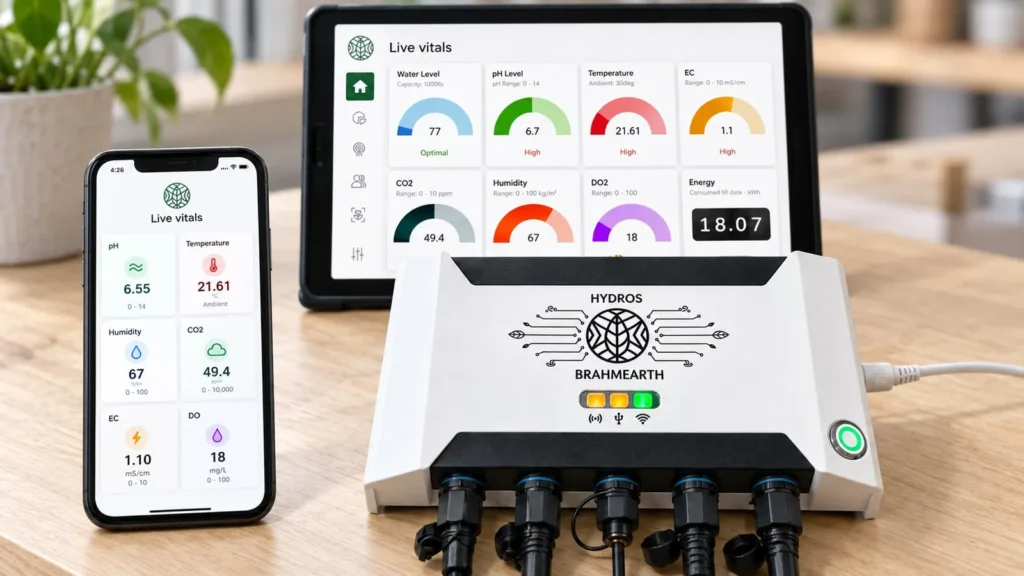
4. Battery-powered field sensors and data loggers
Small sealed devices that measure, log and transmit. The usual risks are the power budget, the seal around cables and connectors, and repeatable calibration in a pilot batch. See designing battery-powered field sensors.
5. Countertop dispensing and food appliances
Drinks machines, dosing stations and warmers. Dose accuracy with the real ingredient, food-contact materials and daily cleaning come first. See designing a countertop dispensing appliance.
6. Mechanical, unpowered dispensers
Dispensers that use springs, cams and valves instead of electronics. Simpler to certify, but tolerance, friction and wear show up directly in the dose. See tolerance stack-up explained.
7. Smart-home and consumer IoT devices
Cameras, switch panels and connected accessories. Industrial design, moving mechanisms and radio performance inside the enclosure have to be solved together. See consumer electronics product development.
8. Earbuds, headphones and audio devices
Acoustic chambers, tiny batteries, comfort and fit leave very little room for error, and printed shells rarely behave like moulded ones. See CNC vs 3D printing vs injection moulding.
9. Kids’ electronic toys and learning devices
Toys and learning devices need robust housings, safe batteries, simple interaction and child-safety requirements planned from the first concept. See how to build a hardware MVP.
10. Drinkware with metal shells or added features
Bottles with engraved shells, displays or custom metalwork. Material compatibility, sealing and finishing processes decide cost and feel. See choosing materials for a hardware product.
What these requests have in common
Most started with a working idea or a prototype and a question about what comes next: making it reliable, making it manufacturable, or making it cost less. That is the gap between prototype and production, and it is where DFM and DFA work pays off.
Working on one of these, or something else entirely? Tell us what you’re building.
Related articles

Hardware Product Development: From Idea to Mass Production
Hardware Product Development: From Idea to Mass Production
Designing Battery-Powered Field Sensors and Data Loggers
Designing Battery-Powered Field Sensors and Data Loggers
The Difference Between Industrial Design and Product Engineering
The Difference Between Industrial Design and Product Engineering
Field Robots for Solar and Farm Sites: Ruggedising and Cost-Down
Field Robots for Solar and Farm Sites: Ruggedising and Cost-Down
Ready to take the next step in your product development journey?
Connect
Contact Us
© 2026. Built with ♥️ in Bengaluru.